A Funeral for a Patient
Reflections from Peter Steadman
Recently, I had the honour of attending the funeral of a long-term sarcoma patient of mine. I first met her when she was two years old with metastatic rhabdomyosarcoma. She responded well to initial treatment, but residual disease persisted throughout her right femur. We proceeded with a type 3B rotationplasty and tibial–acetabular reconstruction.
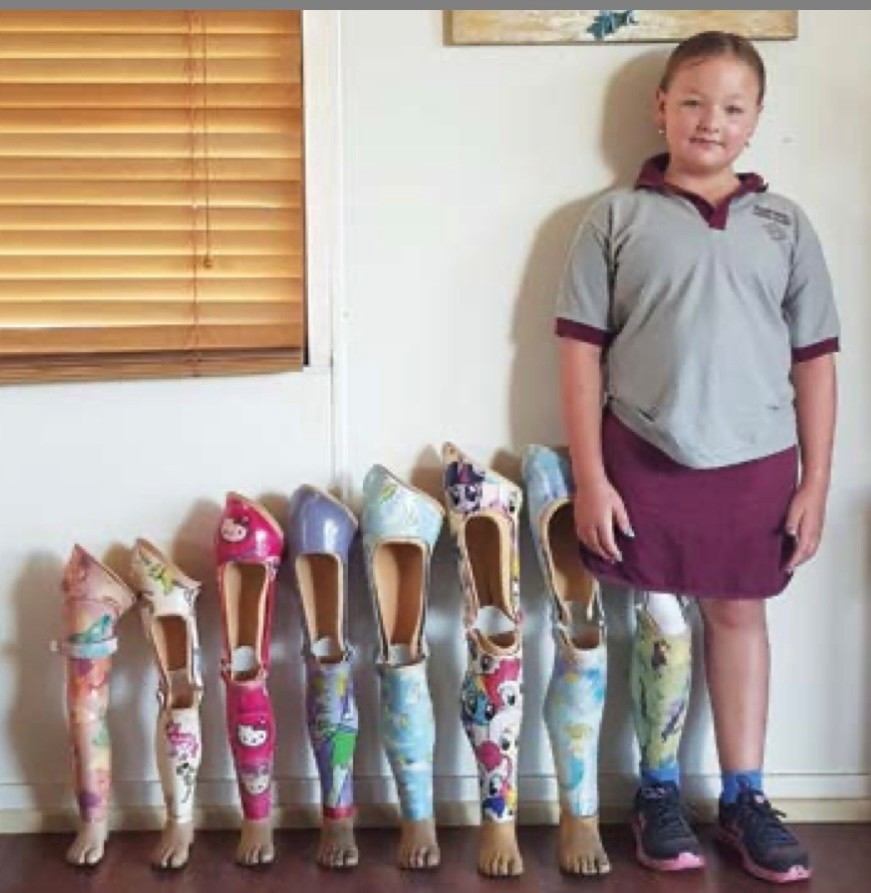
As she grew, she required multiple prosthetic limbs, each marking a milestone in her recovery and resilience. At around nine years of age, she developed Perthes disease in her contralateral hip. After a pin and osteotomy, an unexpected malignant process rapidly enveloped her pelvis and proximal femur — ultimately diagnosed as osteosarcoma. Further genetic testing revealed Li-Fraumeni syndrome; her mother had also died from metastatic breast cancer.
We performed a 3D pelvic resection with proximal femoral replacement on the left. Despite extensive efforts and novel therapies, her disease eventually metastasised and she passed away recently.
That is the clinical story.
But the clinical record doesn’t capture the emotional narrative — the collective grief felt by every clinician, nurse, therapist and technician involved in her care. At her funeral, many of the ward staff who had been part of her journey were there. All of us found it profoundly moving.
Grief is an essential part of processing loss as clinicians. Yet in the pace and pressures of medical life, it is rarely acknowledged, and even more rarely supported.
In February 2026, ISOLS will host a dedicated seminar exploring these challenges. It is my privilege to introduce our Developing Countries Committee and our host for this session, Dr. Lee Zuckerman, who will facilitate this important online discussion.
It is an opportunity to step back, reflect, and gain insight into issues we often ignore — until we find ourselves exhausted, demoralised, or burnt out.
Caring for the Carers
Reflections from Lee Zuckerman
As orthopaedic oncologists, we are privileged to care for patients throughout the entirety of their cancer journey. We form deep and enduring relationships with patients and families. We deliver difficult news. We perform high-risk, life-altering surgeries. We face complications and, at times, devastating outcomes. And when a patient dies, that loss does not stay at the hospital doors.
Alongside this emotional load, we navigate delays in care, limited resources, institutional demands, financial pressures, and the very real physical strain of our profession. These cumulative stressors can lead to burnout, moral distress, and moral injury — realities that remain under-recognised and under-studied within our subspecialty.
With this in mind, I am honoured to moderate our February webinar:
“Emotional Injuries of Physicians in Musculoskeletal Oncology: Burnout, Moral Distress and Moral Injury.”
Our distinguished faculty — Mark Gebhardt, Susan Bukata, Mike Russell and Francisco Linares — will share expertise and lived experiences to help us better understand, acknowledge, and address these challenges.
I hope this thought-provoking discussion serves as a starting point — not only for support, but for meaningful research and ongoing change.
How you can help
We are conducting an IRB-approved survey to evaluate emotional challenges among clinicians caring for musculoskeletal oncology patients. The survey takes approximately 10–15 minutes to complete and is available in both English and Spanish. We would greatly value your participation.
Please click the link or scan the QR code below